
ARTICLE
Stop Multitasking: The Case for Four-Hour Focus Blocks
by Shanda K. Miller
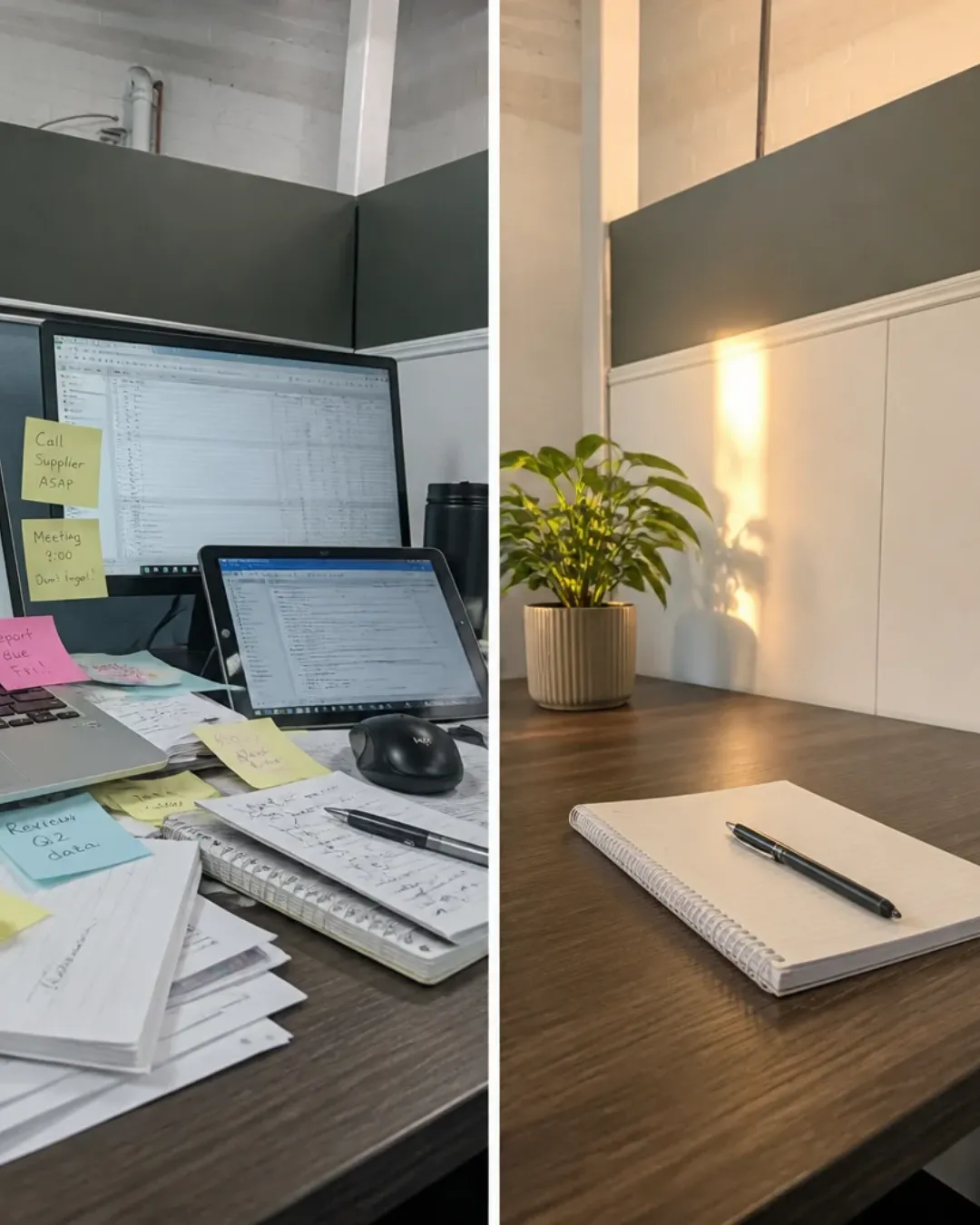

Let's say you need to write a progress report. You sit down, open the file, and start. But first you have to remember your objectives. Then you have to figure out where you left off.
That warm-up takes a while. It's how our brains settle into focused work.
Now imagine your phone buzzes. Then an email notification pops up. Then someone stops by your desk with a quick question. Each time, you lose your place and have to find it again.
I've lived this. Maybe you have too.
Multitasking Isn't What You Think It Is
The days of bragging about our multitasking skills are over. Multitasking doesn't make us more productive. It reduces productivity.
It also reduces focus and concentration. The result is that we need more time to get things done, not less.
Here's why. We aren't really doing two things at once. What we're actually doing is switch-tasking. Every time we switch, it takes time to re-orient to the new task.
Those little re-orientations add up. A day full of interruptions can leave you busy from morning to night with very little to show for it.
The Typical Workday Works Against Us
Most of us have focused work that needs to get done. A report. A budget. A plan for the team. Yet we rarely create the right environment for doing it well.
The typical work environment doesn't support big chunks of uninterrupted time. We start and stop throughout the day. We get interrupted by email notifications, phone calls, and people stopping by our desks.
After each interruption, we need a few minutes to remember where we left off. Then we need a few more minutes to get back into the flow.
If we can work on that report for four hours straight, we're far more likely to finish it in that time. The fix isn't working harder. It's protecting your time.
Step 1: Schedule a Four-Hour Block
Every day, put a block of uninterrupted time on your calendar. In The One Thing, Gary Keller and Jay Papasan recommend four hours of focused time daily.
If four hours isn't doable, schedule two two-hour blocks instead. Even that is a big step up from scattered minutes.
Choose the part of the day when you're most productive, if you have the flexibility. Most people do their best work first thing in the morning. Focused work takes mental energy, and most of us are more alert early in the day.
Step 2: Protect It Like a Meeting With Your Boss
A block on your calendar means nothing if you give it away. Protect it just as you would protect an hour with your boss.
That may mean setting expectations. Tell your team and your boss why this time matters to you. Share what you'll be working on and when you'll be available again.
Over time, you can help create a culture where focused work time is the norm for everyone. Start with your own team first. Then get buy-in from your boss.
Step 3: Tell Your Team How to Reach You
Protecting your time doesn't mean disappearing. It means being clear.
Share your communication preferences with your team. For things that come up between check-ins, say whether you prefer they drop by, call, or email.
Also tell them when you don't want to be contacted. That includes your blocks of focused work time and after work hours. Your team can't respect a boundary they don't know about.
Step 4: Work on One Thing at a Time
During your block, pick one thing. Choose your biggest priority or the deliverable due first. Close the tabs you don't need. Silence your notifications.
When we focus on one thing at a time, we get better results. We can also enter a state of flow. Flow is that feeling of being absorbed in the work, and it makes us more productive and the experience more satisfying.
Start with the most important task. It's usually the hardest one, and it takes the most mental energy. Do it while you're fresh.
Why This Is Worth the Effort
You might be thinking, "My job is all interruptions. My team needs me." I hear you. Being available matters, and I'm not suggesting you shut your door all day.
But think about what happens when you never get focused time. Your most important work gets squeezed into evenings and weekends. You end up tired, behind, and short-tempered with the people you lead.
Focused blocks give you the opposite. You get your top priorities done during your scheduled work time. That's how you leave on time and still deliver exceptional results.
It also models something for your team. When they see you protect focus time, they learn they can protect theirs too.
Try It This Week
You don't have to change everything at once. Start with these steps:
Block one session on your calendar this week. Make it two hours if four feels like too much.
Pick your one priority for that block before it begins.
Tell your team when you'll be unavailable and how to reach you in a true emergency.
Silence notifications and close your email during the session.
Notice how it feels afterward, and how much you finished.
One focused block can change the shape of your whole week. Try it once and see.
Stop switching. Start finishing.
When’s your first focus block this week?
Heads up: This post is adapted from my book From Supervisor to Super Leader with the help of AI, but thoroughly reviewed and edited by me.
Improve your team skills now. Do you want to be better at coaching staff? Do you find it hard to give honest feedback? Get this book.

Helping leaders thrive!
© 2026 Become a Super Leader - All Rights Reserved
1711 Willamette St Suite 301 #739
Eugene OR 97401