ARTICLE
The One Blind Spot That's Sabotaging Your Leadership
(And How to Find It)
by Shanda K. Miller

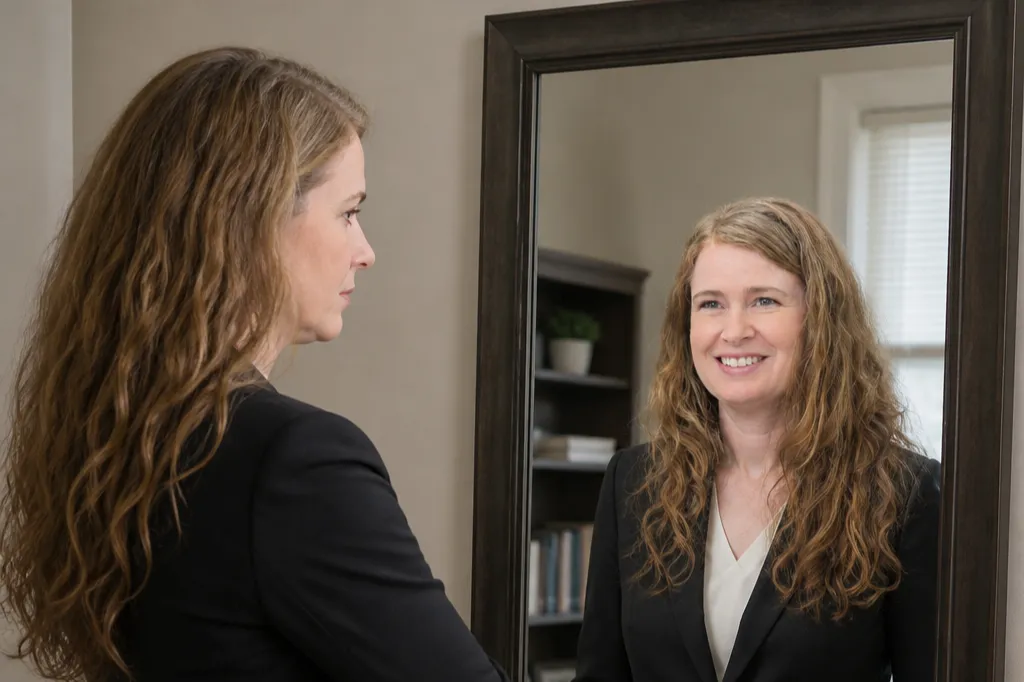
Early in my career, I thought my resting face was neutral. It wasn't.
My husband had another name for it: the deadpan face. Turns out, that "neutral" expression made me look unapproachable.
My coworkers read it as cold. Distant. Hard to talk to. None of that was my intention.
That's the tricky thing about blind spots. They're invisible to you, but obvious to everyone else.
What Exactly Is a Blind Spot?
A blind spot is a gap between how you see yourself and how others actually experience you. You think you're approachable. Your team thinks otherwise.
The gap doesn't announce itself. Nobody sends you a memo. You just keep operating the way you always have, unaware of the impact.
And that's the real danger. Blind spots quietly limit your growth. They shape how people respond to you, long before you ever notice a pattern.
I didn't discover my deadpan face through introspection alone. I discovered it because I asked. Directly. Uncomfortably. On purpose.
That's the only reliable way blind spots surface: someone else has to hold up the mirror.
Why You Can't See Your Own Blind Spots
Self-reflection has limits. You can journal for hours and still miss the thing that's obvious to your team.
Here's why: your intentions and your impact aren't the same thing. You know what you meant. Your coworkers only see what you did.
I wanted to seem open and welcoming. My face told a different story. The disconnect between intention and impact is exactly where blind spots live.
This is why feedback from others matters so much. It's the only tool that closes that gap.
The Questions That Reveal Your Blind Spots
You don't need a formal 360-degree review to start. You need a few honest questions and the courage to actually ask them.
Try these. I borrowed them directly from a leadership course I once took:
What do you see as my strengths?
What do you see as my weaknesses?
What do you think others say about me when I'm not around?
That last question stings a little. Good. It's designed to.
Asking these questions takes guts. But the answers can reshape how you show up as a leader—and how your team experiences working with you.
How to Ask for Feedback Without It Backfiring
Timing and delivery matter just as much as the questions themselves. Ask wrong, and people clam up. Ask right, and you get the truth.
A few ground rules make this easier:
Don't ask when you're emotional or vulnerable. You'll take it personally instead of learning from it.
Ask for feedback in small doses. One theme at a time beats an overwhelming laundry list.
Pick people you trust. Choose someone with a strong relationship with you, and tell them explicitly that you want honesty.
Prepare to sit with discomfort. Not every answer will feel good. That's normal.
Most people you ask will hesitate. They don't want to hurt your feelings. Tell them directly that you can handle the truth, and mean it.
What Happens Once You Find Your Blind Spot
Discovering a blind spot doesn't fix it overnight. Awareness is just step one.
For me, learning about my deadpan face changed how I carried myself day to day. I started smiling more. Making eye contact. Actively acknowledging people.
I also did something simple but effective: I told people about it. I let colleagues know my resting face wasn't a reflection of my mood.
That one disclosure did a lot of work. It gave people context instead of leaving them to guess.
Naming your blind spot out loud removes its power over how people perceive you.
Blind Spots Aren't a Weakness—They're Universal
Every leader has them. The ones who grow are the ones willing to go looking.
This isn't about being perfect. It's about closing the gap between how you intend to show up and how you actually land with your team.
Left unaddressed, blind spots erode trust slowly and quietly. Nobody tells you directly. They just start pulling back.
Addressed head-on, blind spots become one of the fastest paths to becoming a better leader. Not because you changed who you are—but because you finally saw yourself clearly.
Start Your Own Blind Spot Practice
You don't need a big initiative to uncover your blind spots. You need one honest conversation.
Here's how to begin this week:
Pick one trusted colleague or team member.
Ask one of the three questions above.
Listen without defending yourself.
Say thank you, even if it stings.
Repeat with someone new next month.
Blind spots don't disappear because you're busy or successful. They disappear because you chose to look for them.
Start small. Ask one question this week. You might be surprised by what you learn about the leader others actually see.
Heads up: The images of me in this post are AI-created illustrations, not photographs. This post is adapted from my book From Supervisor to Super Leader with the help of AI, but thoroughly reviewed and edited by me.
My purpose is to help leaders thrive—at work and in life.
I’d love to know your current leadership challenges or your current leadership goal.
Send me an email.
I’d love to hear from you.
shanda (at) becomeasuperleader.com
Improve your team skills now. Do you want to be better at coaching staff? Do you find it hard to give honest feedback? Get this book.

Helping leaders thrive!
© 2026 Become a Super Leader - All Rights Reserved
1711 Willamette St Suite 301 #739
Eugene OR 97401